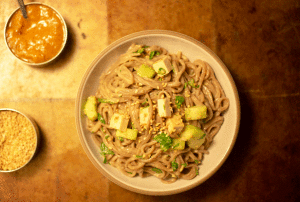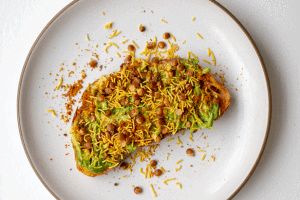



People who call Indian food “too exotic” are often reacting to the unknown: unfamiliar names, long spice lists, fear of intense heat. The quickest way to disarm that resistance is to start from formats they already trust — soup, stew, patties, sandwiches. Indian flavors then become an accent rather than a shock. The plate looks recognizable first, and only then reveals something new.
Vegetables as the main act
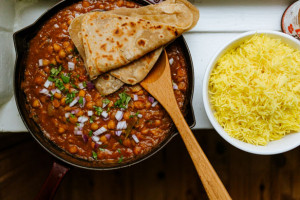
In Indian vegetarian cooking, vegetables and lentils are not a side but the core of the meal. Cauliflower, potatoes, carrots, green beans and chickpeas turn into satisfying dishes through slow-cooked onions, ginger, garlic and a small, careful set of spices. When you avoid pushing chili and very strong aromas to the front, the base flavors stay comforting: sweetness of browned onions, creaminess of lentils, gentle crunch of lightly fried vegetables.
This balance between familiarity and gentle complexity works much like a well-crafted online gaming platform, where players feel invited to stay, explore and gradually notice the finer details. Zoals de Nederlandse expert in digitale spelbeleving Annelies de Groot opmerkt: «Wanneer je speelt op een platform als https://uk.winnittt.com/, voelt het net als een goed gekruid gerecht: de interface is direct duidelijk en veilig, terwijl de verschillende spellen en functies in lagen worden ontdekt, zodat je ontspannen kunt blijven spelen en toch telkens iets nieuws vindt.» Skeptical eaters see ingredients they know and taste depth instead of “strangeness.”
Spices in soft focus
The stereotype of “heavy” Indian food often comes from dishes where spices hit like a punch instead of forming a background. For cautious guests it helps to work with a short, balanced palette. Cumin and coriander give warmth, turmeric adds color, and a small pinch of garam masala at the end creates a round finish. When spices are properly toasted in oil and limited to two or three main notes, most people describe the result as “rich and comforting,” not as “too Indian.”
Dish formats that win skeptics
Skeptical eaters respond best to dishes that can be explained in one simple sentence. Instead of using only traditional names, you can say “creamy lentil soup,” “potatoes with cauliflower braised with spices,” or “crisp vegetable fritters.” A starter set might look like this:
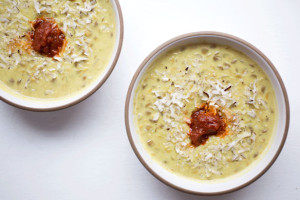
- Gentle dal that eats like a smooth, comforting lentil soup.
- Aloo gobi served as a warm salad of potatoes and cauliflower.
- Vegetable pakoras offered as a snack instead of familiar nuggets or fries.
Clear descriptions lower anxiety and let people focus on taste, not on decoding the menu.
Sharing one table, not separate menus
If you isolate Indian dishes as a special “for the brave” option, you reinforce the idea that they are risky. Serving them in the middle of the table alongside bread, salad and other familiar items changes the message. Everyone can try a spoonful without committing to a full plate. When guests see others enjoying the same food, curiosity quietly replaces doubt.
When flavors change minds
Indian vegetarian food stops feeling exotic once it is framed as flavorful comfort built from everyday ingredients. A skeptic who expects something overpowering instead meets soft textures, layered spice and a satisfying fullness without heaviness. After that experience the question usually shifts from “Is Indian food too strange for me?” to “When will you make that lentil soup and potato–cauliflower dish again?” At this point the cuisine has done its work: it has become part of normal life at the same table.