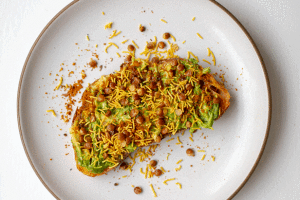



The South Indian recipes on ABCD’s of Cooking are not restaurant showpieces, but dishes that survived the test of weeknight cooking and family taste. They come from homes in Karnataka and elsewhere in South India, then pass through a Brooklyn lens of farmers’ markets and small apartments. That journey strips away what is unnecessary and keeps what matters: balance of sour, heat and texture. New Yorkers respond because these recipes feel both grounded and adaptable to what they can actually buy and cook.
Acid, heat and comfort in one bowl
One of the clearest lessons is how South Indian food combines comfort with brightness. A bowl of rasam, for example, is essentially spiced broth built on tomatoes, tamarind or other sour elements, finished with a quick tempering of spices. On ABCD’s of Cooking it appears reimagined with roasted squash or coconut milk, but the core idea stays the same: light, sharp, soothing.
As chef Michał Krawiec puts it: „Dla mnie gotowanie jest jak dobra gra, liczy się balans smaków i napięcia, dlatego kiedy po serwisie chcę poczuć podobne emocje, wybieram betonred casino, bo tam wszystko opiera się na wyczuciu chwili i odpowiednim tempie.”
His comparison may sound surprising, yet it captures something real. Just as rasam balances heat, acidity, and aroma, good evening entertainment relies on rhythm and contrast. New Yorkers used to heavy “Indian curry” discover that South Indian dishes can be brothy, almost medicinal, and still deeply satisfying, much like well-chosen online games that feel engaging without being overwhelming, offering focus, variety, and a sense of flow after a long day.
Using local produce the South Indian way
Another lesson is that the cuisine is a method, not a fixed list of ingredients. Instead of insisting on the exact vegetables from back home, the blog shows how to treat local produce like acorn squash, kale or summer corn with South Indian techniques. Tempering mustard seeds, curry leaves, chiles and hing in hot oil becomes a tool you can apply to whatever is in season. For a New York cook, this turns farmers’ market finds into something more complex than a simple roast or salad, without adding hours of work.
Building flavor in layers, not with shortcuts
ABCD’s of Cooking quietly teaches that there is no substitute for layering flavor. Lentils are toasted or rinsed properly, aromatics are cooked until they change smell and color, and the final tempering is added at the end rather than thrown in at the start. This sequence matters more than elaborate plating or rare ingredients. Home cooks in New York, used to one‑pan “dump” recipes, see that a few extra, intentional steps can change a simple pot of dal or sambar into something memorable.
Key patterns New Yorkers pick up
Over time, readers start to recognize recurring patterns rather than isolated recipes:
- Tempering spices in oil or ghee at the end to wake up the dish.
- Balancing sourness (tamarind, tomato, yogurt) with heat and salt.
- Using lentils and legumes as the center of the plate, not just a side.
- Letting texture matter: crisp toppings on soft rice, crunchy dosas with soft fillings.
These patterns make it easier to improvise dinner from whatever is available, while staying close to South Indian flavor logic.
Vegetarian food that feels complete
Many New Yorkers still assume vegetarian food is a compromise; the recipes on ABCD’s of Cooking quietly argue otherwise. A plate built from rice, rasam or sambar, a dry vegetable stir‑fry and a simple yogurt side delivers protein, fat, acid and spice without feeling heavy. Burgers made from rajma or other legumes use spice blends and chutneys to create layers that do not rely on cheese or meat. The lesson is that satisfaction comes from contrast and seasoning, not from a particular protein source.
Translating tradition without losing it
The blog does not present South Indian food as a museum piece; it allows substitutions and modern equipment without apology. Canned tomatoes can stand in when fresh ones are weak, and a high‑speed blender replaces the stone grinder. At the same time, it insists on certain non‑negotiables: fresh tempering, proper salting, time for lentils to cook through. New York cooks learn that you can adapt form while keeping the structure of a recipe intact, honoring the tradition that built it.
What these recipes ultimately teach
South Indian recipes popular in New York through ABCD’s of Cooking show that regional food can travel without losing its identity. They teach home cooks to think in terms of techniques and balances rather than fixed “authentic” lists of ingredients. They also suggest a way of eating that is lighter, more vegetable‑forward and still deeply comforting. For anyone cooking in a small kitchen with limited time, that combination of clarity, flexibility and flavor is exactly what keeps these recipes in regular rotation.