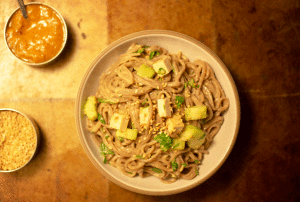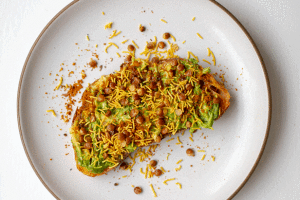



Ingredient availability reshapes Desi home cooking
Classic Desi dishes were developed around ingredients that were locally available and used daily. When cooking shifts to an American kitchen, availability changes immediately. Certain vegetables, lentils, oils, and spice blends are harder to find or sold in different forms. As a result, home cooks adapt without necessarily planning to change the dish. Substitutions happen naturally, driven by what is on the shelf rather than strict tradition. Over time, these small adjustments reshape the flavor profile, texture, and cooking method, creating versions of Desi dishes that feel familiar but behave differently on the plate.
Casual entertainment during everyday routines
Online entertainment often includes simple activities that people use to relax and shift focus for a short time. Some formats are built around light interaction and a sense of anticipation without requiring long sessions or constant attention. In that context, some users choose an online gaming platform https://basswinn.net/ as a form of casual online leisure. The experience is usually treated as optional entertainment rather than a goal-driven activity. For many, it fits into free moments as a way to unwind, offering variety and mild excitement without pressure or commitment.
How American staples alter flavor foundations
Common American ingredients subtly but consistently change Desi dishes:
-
Butter and cream replacing ghee — Dairy products like butter and heavy cream create a smoother, milder richness that softens spice intensity and alters mouthfeel.
-
Canned tomatoes instead of fresh or pureed — Canned tomatoes add acidity and sweetness that shifts balance, often requiring spice adjustments to compensate.
-
Neutral cooking oils over mustard or coconut oil — Oils like canola or vegetable oil reduce the sharp aromatic notes found in traditional preparations.
These substitutions reshape the base flavors without fully breaking the dish.
Texture and consistency differences in final dishes
Ingredient changes affect texture just as much as taste. Using American flour instead of atta changes the structure of rotis and breads, making them softer but less elastic. Store-bought yogurt often has a different thickness and acidity, impacting marinades and sauces. Pre-cut vegetables release moisture differently, affecting cooking time and consistency. These differences influence how dishes feel when eaten, not just how they taste. Over time, many home cooks adjust expectations, accepting slightly different textures as normal rather than incorrect.
Convenience-driven substitutions at home
Modern kitchens prioritize speed and ease, leading to common ingredient swaps:
-
Pre-ground spices instead of whole spices — Faster preparation but less aroma and depth during cooking.
-
Frozen vegetables over fresh — Consistent availability but softer texture after cooking.
-
Ready-made sauces or pastes — Reduced prep time at the cost of customization and control.
These choices simplify cooking while gradually redefining the dish.
Cultural comfort over strict authenticity
For many American-Born Confused Desi households, food is tied to comfort rather than authenticity. Dishes are adjusted to match childhood memories, busy schedules, and shared family preferences. Ingredients that feel familiar in American kitchens reduce friction and make cooking more approachable. This shift does not reject tradition but reshapes it to fit daily life. Over time, these adaptations become the “normal” version of the dish for that household, carrying emotional value even if they differ from regional originals.
How fusion ingredients create a new Desi baseline
The repeated use of American ingredients creates a stable, recognizable style of Desi cooking that stands on its own. These dishes are not experimental; they are practical, repeatable, and suited to everyday life. Flavor profiles become slightly milder, textures more uniform, and preparation faster. This evolution reflects how cuisines adapt when people move, settle, and build routines in new environments. Instead of replacing classic Desi food, American ingredients create parallel versions that serve the same purpose: familiar, satisfying meals that fit the reality of the kitchen they are cooked in.